DICTA 2023 - Keynote Speakers
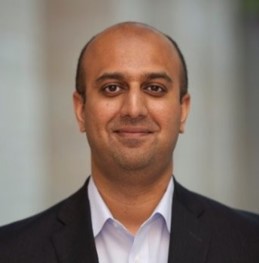 |
Keynote Speech 1 Speaker: Professor Yaser Sheikh, Director of Meta Reality Labs, Pittsburgh, USA Title: TBD. Abstract: TBD. Speaker Biography: Yaser Sheikh is founding director of Facebook Reality Lab in Pittsburgh focused on pursuing "metric telepresence": remote interactions in AR/VR that are indistinguishable from reality. His research is focused on machine perception and rendering of social behavior, spanning sub-disciplines in computer vision, computer graphics, and machine learning. He has won Popular Science’s Best of What’s New Award, the Honda Initiation Award (2010), best paper awards at WACV (2012), SAP (2012), SCA (2010), and ICCV THEMIS (2009), and placed first in the MSCOCO Keypoint Challenge (2016); he received the Hillman Fellowship for Excellence in Computer Science Research (2004). Yaser has served as a senior committee member at leading conferences in computer vision, computer graphics, and robotics including SIGGRAPH (2013, 2014), CVPR (2014, 2015), ICRA (2014, 2016), ICCP (2011), and served as an Associate Editor of CVIU. His research is sponsored by various government research offices, including NSF and DARPA, and several industrial partners including the Intel Corporation, the Walt Disney Company, Nissan, Honda, Toyota, and the Samsung Group. His research has been featured by various media outlets including The New York Times, The Verge, Popular Science, BBC, MSNBC, New Scientist, slashdot, and WIRED. He received his PhD in 2006 from the University of Central Florida advised by Prof. Mubarak Shah, and completed a postdoctoral fellowship in 2008 at Carnegie Mellon University under the mentorship of Takeo Kanade. He received his BS degree from the Ghulam Ishaq Institute of Engineering Science and Technology in 2001.. |
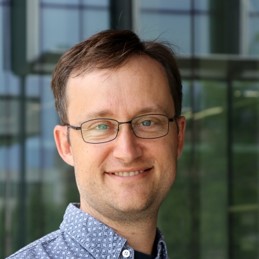 |
Keynote Speech 2 Nathan Jacobs is professor of computer science at McKelvey School of Engineering. He is a member of the Institute for Biomedical Informatics and owner of Multidomain Vision Research LLC, a research and software development firm that specializes in novel algorithms in computer vision, medical imaging and remote sensing. His research has been funded by the National Science Foundation, National Institutes of Health, Defense Advanced Research Projects Agency (DARPA), Intelligence Advanced Research Projects Activity (IARPA), National Geospatial-Intelligence Agency (NGA) and Google, among others. He holds two U.S. patents and has received numerous awards and honors, including a National Science Foundation CAREER award in 2016 and the College of Engineering Dean’s Award for Excellence in Research at the University of Kentucky in 2018. Professor Jacobs’ research centers on developing learning-based algorithms and systems for extracting information from large-scale image collections. He has applied this expertise in many application domains, with a particular focus on geospatial and medical applications. He earned a PhD in computer science at Washington University in St. Louis in 2010. Prior to re-joining the institution as a professor in 2022, he was a professor of computer science at the University of Kentucky. |
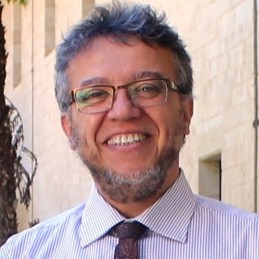 |
Keynote Speech 3 Speaker: Prof. Mohammed Bennamoun , The University of Western Australia Title: TBD Abstract: TBD. Speaker Biography: Mohammed Bennamoun is a Winthrop Professor at he Department of Computer Science and Software Engineering at The University of Western Australia (UWA). He served as the Head of the School of Computer Science and Software Engineering at UWA for five years (February 2007-March 2012). He is the author of four books (available on Amazon), including: ``Object Recognition: Fundamentals and Case Studies'', Springer-Verlag, 2001, `A Guide to Convolutional Neural Networks for Computer Vision', `3D Shape Analysis: Fundamentals, Theory, and Applications', and Neural Representations of Natural Language'. He published 160+ journal and 260+ conference publications. He won the UWA Vice-Chancellor’s Research Mentorship Award in 2016. Only one award is granted per year, in this category, across the whole UWA. He also won the UWA Award for Teaching Excellence for Research Supervision in 2016. He was congratulated for his “outstanding contributions and for going above and beyond, to inspire, support and educate”. He won the “Best Supervisor of the Year” Award at QUT. He also received an award for research supervision at UWA in 2008. He served as a guest editor for a couple of special issues in International journals, such as a Special Issue in the IEEE Transactions on Pattern Analysis and Machine Intelligence (IEEE TPAMI), the International Journal of Pattern Recognition and Artificial Intelligence (IJPRAI). He was selected to give conference tutorials at the European Conference on Computer Vision (ECCV) and the International Conference on Acoustics Speech and Signal Processing (IEEE ICASSP), and the International Conference on Computer Vision and Pattern Recognition (CVPR 2016). He was invited to deliver courses at the International Summer School on Deep Learning (DeepLearn 2017 and DeepLearn 2022). He served as a member of the ARC College of Experts from (2012-2015 and 2019-2021). He also served as a member of the ARC ERA (Excellence Research for Australia) in 2018. He is also a member of the College of Assessors for the Ministry of Business, Innovation and Employment, New Zealand. |